
If you’ve tried to get back into a gym routine before and it quietly fell apart after a few weeks, you’re not alone, and it probably wasn’t a motivation problem. Most people who drift away from a gym aren’t lazy. They just didn’t have enough to keep them connected.
Why Most Gym Routines Lose You After a Few Weeks
The biggest reason people leave gyms is that they’re not being connected with people who are like-minded. They’re not being guided when they’re starting a new routine, and they don’t know what to do when they get there. So they wander around, do the same few machines, and eventually stop going because nothing is pulling them back.
That’s a structural problem, not a personal one. When there’s no plan and no one who knows your name, it’s easy to talk yourself out of going.
What Makes CrossFit Workouts Different From a Standard Program
In a CrossFit class, you’re not using machines. You are the machine. The focus is on teaching you how to move your body correctly, how to use a barbell, how to use dumbbells, and how to do it all safely.
The movements are practical. Carrying odd objects, getting to the ground and standing back up, lifting grocery bags without straining your back, walking upstairs without your knees complaining. These aren’t gym-specific skills. They’re things you do every day, and training them makes everyday life easier.
There’s also a broader fitness carry-over that most people don’t expect. If you ever wanted to do a 5K with a friend or join a family event that involves some physical challenge, you don’t necessarily have to train specifically for it. The conditioning you build through consistent CrossFit workouts tends to transfer.
How Varied Programming Keeps Your Brain as Engaged as Your Body
One of the things that keeps people coming back is that the workout changes every day. Some members like to check what’s programmed ahead of time. It helps them prepare mentally, know what to bring, and they get excited about it. They’ll text friends, compare notes, and look at how others have already performed the workout. For them, the anticipation is part of the experience.
Other members deliberately don’t look. If they see a workout they don’t love, they might talk themselves out of coming. So they’d rather just show up and do what they’re told. Both approaches work, and both types of people exist in the same gym, which says something about how the programming accommodates different personalities.
The variety means you’re rarely dreading the same thing twice in a row. That matters more than most people realize when it comes to actually getting yourself out the door.
The Role the Group Plays When Novelty Alone Is Not Enough
At CrossFit Elkhorn, every class starts together and ends together. One of the gym’s core values is “supportive,” which they describe as “we are before me.” The coach leads the entire hour from start to finish.
From the first day, members hear their name called out and feel welcomed. Everyone in the class knows each other’s names because that’s built into how class runs. Members are genuinely interested in getting to know you, your story, and why you’re there.
At the end of class, there are fist bumps, wins called out, and a cool-down where the coach highlights what people did well. It’s not performative. It’s just how the hour closes, every time.
That consistency matters. When you know people are expecting you and will notice if you’re not there, it changes the calculus on whether you go.
What Consistency Actually Looks Like in a CrossFit Gym
At CrossFit Elkhorn, the goal for members is to attend at least four classes per week. The programming is built to support that kind of frequency without becoming repetitive. A typical week includes lifting three times, a longer conditioning day, a partner workout, a muscle-building day, and a shorter sprint-style session.
The variety is intentional. The more often you show up, the more of that variety you experience, which keeps the workouts from blending together. It also means more time around people, which reinforces the habit.
Four days a week is the target, but even three days of consistent attendance builds real fitness over time.
Is CrossFit Too Intense If You Have Been Out of a Routine for a While
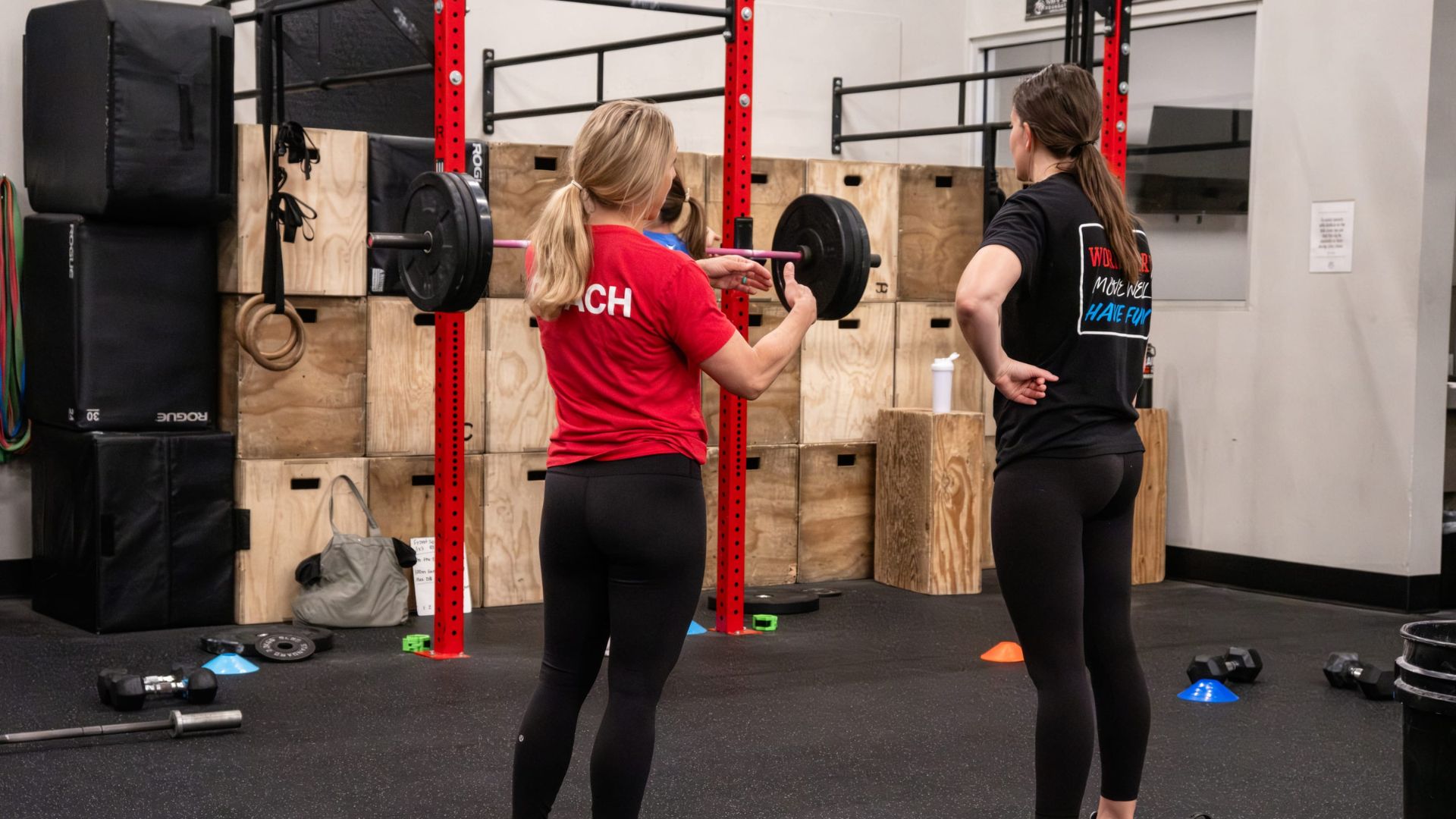
This is probably the most common concern, and it’s worth addressing directly. At CrossFit Elkhorn, newer members start with PVC pipes to learn barbell movements safely, and that happens as a group, not off to the side by yourself.
Every movement is coached step by step. Modifications are always available. The emphasis for newer members is on consistency before intensity. The goal for any given workout is more important than the weight on the bar, the number of reps, or whether you’re doing the movement exactly as prescribed.
The approach is to vary and reduce intensity rather than swap out the movement entirely. That means adjusting reps, range of motion, or loading so you can still do the workout safely, still meet the goal, and still feel like you were part of the class. Whether it’s your first day or your tenth year, the structure holds.
How to Know If This Style of Training Fits Where You Are Right Now
A few honest questions are worth sitting with. Do you feel good about being in a group atmosphere? Do you like having a plan when you walk in the door? Do you like being around people who are working toward similar things?
For people who are busy and can only get to the gym three or four times a week, CrossFit tends to work well because the hour is structured, coached, and complete. A lot of members use it as stress relief. It’s the one hour in the day that’s entirely focused on them, not their kids, not their inbox, not anyone else’s schedule.
For most members at CrossFit Elkhorn, that hour ends up being the best part of their day, physically and mentally. The simple version: if you just show up, you’re going to get better.
If that sounds like what you’ve been looking for, CrossFit Elkhorn is worth a look. Reach out and ask about getting started. There’s no pressure, just a coach who will answer your questions honestly.


